
Right to Disconnect Bill 2025 Introduced in Lok Sabha: Key Provisions and Chances of Passage
The Right to Disconnect Bill, 2025 aims to give employees the legal right to ignore work communication beyond office hours. It was introduced as a private member’s bill in the Lok Sabha.
Author: V.Gayathri
Published: 1 hour ago
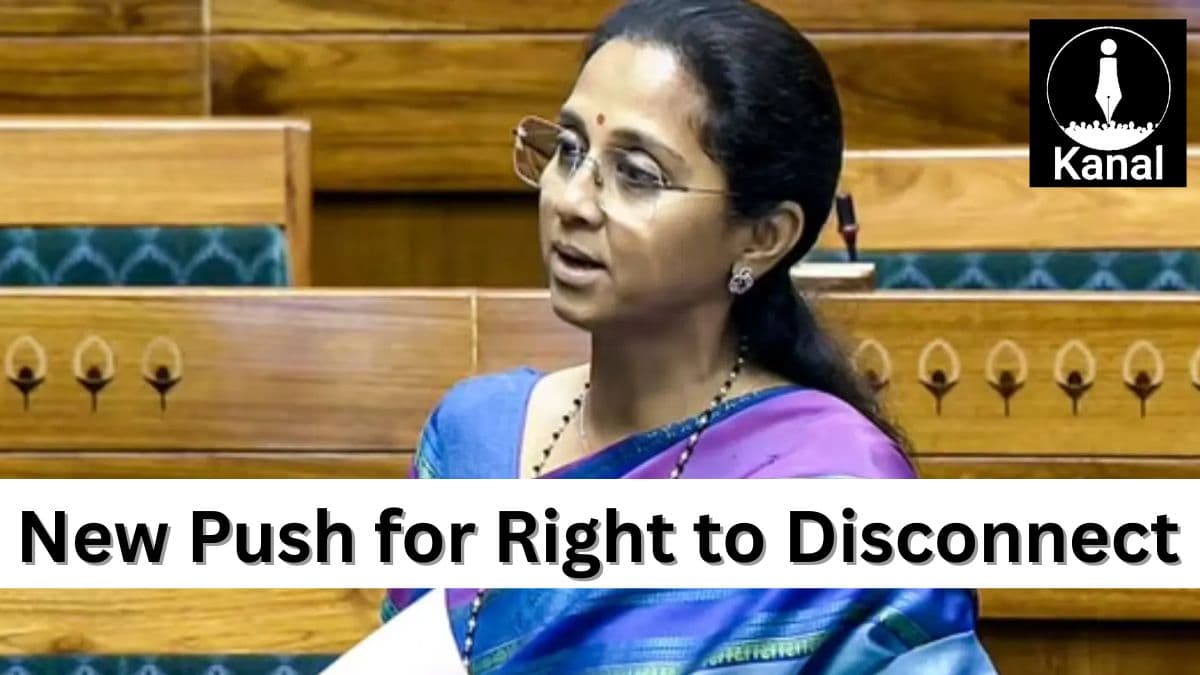
The Right to Disconnect Bill, 2025 has been introduced in the Lok Sabha by NCP (Sharadchandra Pawar) MP Supriya Sule during the ongoing winter session of Parliament. The bill seeks to address growing concerns around employee burnout and work-life balance in the age of continuous digital communication. As a private member’s bill, it has sparked conversations on workplace rights, labour reforms, and the increasing stress linked to an always-on work culture.
What Is the Right to Disconnect Bill, 2025?
The Right to Disconnect Bill, 2025 proposes the establishment of an employees’ welfare authority to safeguard the right of workers to disconnect from work-related calls, emails, and messages beyond official working hours and on holidays. According to the bill, this right aims to promote a healthier work-life balance and reduce pressure caused by modern digital communication systems.
Advertisement
Objective of the Bill
Supriya Sule emphasised that the bill is intended to foster better quality of life and a more balanced work environment. By limiting after-hours engagement, the proposal aims to help reduce burnout and improve employee well-being in both public and private sector workplaces.
Other Employee-Centric Bills Introduced
Alongside the Right to Disconnect Bill, Supriya Sule also introduced two additional private member’s bills. The Paternity and Paternal Benefits Bill, 2025 proposes paid paternal leave for fathers, supporting early child development. Another bill, the Code on Social Security (Amendment) Bill, 2025, seeks to recognise gig workers as a separate category to ensure minimum wages, fair conditions, regulated hours, and social security benefits.
Related Proposal on Work-Life Balance
Congress MP Shashi Tharoor also introduced a private member’s bill aimed at protecting employees from burnout and overwork. His proposal seeks to amend the Occupational Safety, Health and Working Conditions Code, 2020, highlighting concerning statistics of extended working hours and the rising impact on mental and physical health.
Can the Right to Disconnect Bill, 2025 Clear Parliament?
The bill is a private member’s bill, meaning it was introduced by an MP who is not a minister. Historically, private member’s bills rarely become law and are often withdrawn after the government’s response. While the bill has generated discussion, its passage depends on future government action and legislative priorities.
Advertisement
The Right to Disconnect Bill, 2025 has brought national attention to the growing issue of employee burnout and the need for healthier work practices. Although private member’s bills have limited chances of becoming law, the proposal has sparked an important debate on modern workplace rights, digital communication, and work-life balance in India.
Source - Hindustan Times
Advertisement
No comments yet.